
Your cart is currently empty!
Transfer speed
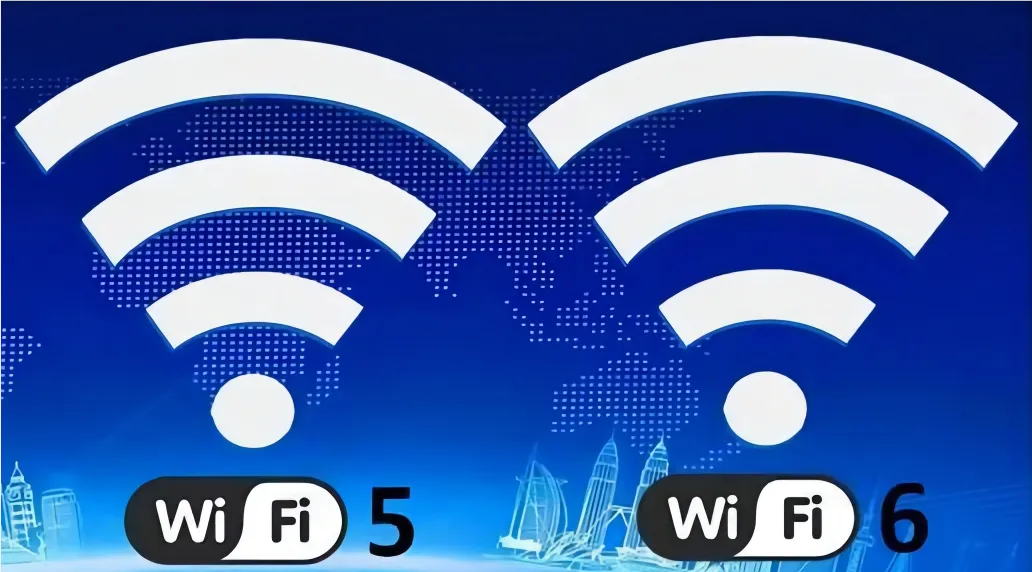
The transmission rate of the latest generation of WiFi-6 (802.11ax) can reach up to 9.6Gbps, which means that the theoretical transmission speed has reached 1.2GB/s, which is 40% faster than the previous generation.However, this is only a theoretical value. This rate is mainly determined by the number of wireless signals occupied. Generally, in a more complex situation in daily life, 3 times the rate is difficult to achieve.
Band increase
In terms of frequency bands, the previous generation of WiFi involved 5GHz, while WiFi 6 covers 2.4/5GHz, and both high-speed and low-speed devices can quickly access WiFi6.In the modulation mode, WiFi6 is also higher than WiFi5, the data capacity is higher, the transmission speed is faster, and the WiFi coverage is wider.
Wider coverage
WiFi will be blocked when it encounters obstacles, but WiFi 6 has greatly improved the ability of signal coverage.When transmitting in medium and long distances, it can pass through many obstacles. To a certain extent, it can reduce the interference of obstacles and enhance the transmission of signals.
Technology upgrade
WiFi6 (802.11ax) has remained basically stable in terms of total bandwidth, and technological innovation has naturally brought about a significant improvement in performance.The increase in network speed is only one aspect of the WiFi6 upgrade. In addition, the added MU-MIMO, OFDMA and other technologies are the core of its upgrade
Is there any conflict between 5G and WiFi6? In theory, the transmission speed of WiFi 6 is comparable to that of 5G networks.But in fact, the application scenario modes of 5G and WiFi are different. The 5G is a wide area network technology with complex system, high cost, and is more used in outdoor scenarios; while WiFi6 system is simple and low in cost, and is mainly used in indoor environments. Therefore, in terms of system construction investment, WiFi 6 is better than 5G.